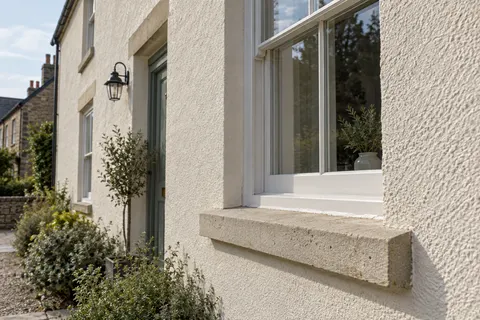
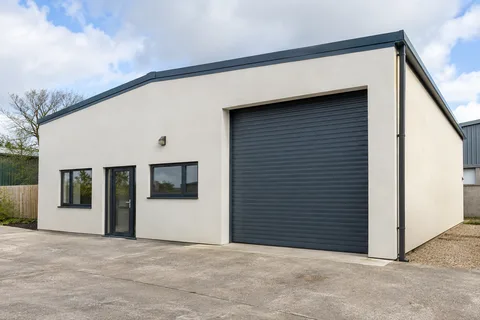
Change the colour without losing sight of the background
Render Respray Chester | Recolouring Existing Exteriors
Recolouring can make a sound exterior feel more coherent, particularly where earlier repairs or different paint choices interrupt the elevation. It is still a building treatment, not simply the selection of a new shade. For Chester properties, the existing coating, retained details and condition of the render determine whether a respray or another decorative application is appropriate. The method should preserve the wall's function while delivering an agreed appearance.

On this page
Define what the colour change is intended to achieve
There is a difference between renewing a tired colour, coordinating two sound elevations and disguising a physically uneven surface. A coating can address colour, but it will follow the texture beneath it. If the aim is a smoother face, the scope may need a different build-up rather than more paint. Describe the desired result before comparing products. This helps identify whether the project belongs under recolouring, local repairs followed by decoration, or a broader wall-rendering scheme.
The treatment of features should be explicit. Window surrounds, panels, downpipes and recesses may remain contrasting or be brought into the main colour. Some fittings should not be coated at all. A marked photograph or elevation drawing can settle those boundaries efficiently. It also reduces the chance of a retained detail being painted merely because it was close to the work. On a designated property, the proposed changes should be checked through the appropriate process before the visual scheme is treated as settled.
- Clean Washed down, with algae and mould treated and left to work.
- Repair first Cracks and hollow patches are repaired before any coating.
- Prime or stabilise Where the coating maker requires it on that surface.
- Coating Usually two coats of a breathable masonry or silicone coating.
The usual order of work. The survey and the chosen products decide the actual steps.
Identify the coating already carrying the colour
Existing paint may be well bonded, powdering, peeling or present in several incompatible layers. The new treatment depends on a suitable remaining base. Cleaning and any necessary removal should follow a method appropriate to the material and condition, with a trial where the outcome is uncertain. A primer can form part of the specified system, but it does not make a weak underlying layer sound. The quotation should therefore describe the preparation as clearly as the finishing product.
| Intended improvement | Work that may be needed |
|---|---|
| Renew an existing colour | Compatible preparation and coating on a sound background |
| Unify repaired patches | Repairs matched in texture, followed by suitable decoration |
| Reduce visible roughness | Assessment of a new finish build-up; coating alone may be insufficient |
| Treat peeling or chalking paint | Investigation and preparation of the failing coating |
| Change a traditional finish | Compatibility and any heritage requirements resolved first |
Deal with defects before masking makes them harder to see
Open cracks, loose areas and damaged edges need assessment before decoration. A fresh uniform colour can make an elevation appear complete while leaving the defect underneath. Establish the necessary repairs and whether the cause has been addressed, particularly beside leaking fittings or altered openings. The proposal should distinguish known work from an allowance for defects revealed during preparation. That gives the owner a clear way to understand changes without pretending that every concealed condition can be priced from an initial photograph.
Where the underlying material is traditional, lime compatibility needs attention. The coating choice should respect the complete wall and its existing layers. General descriptions such as breathable are not a substitute for checking suitability. If an insulated façade is involved, follow the installed system's guidance for cleaning, repair and decoration. An ordinary paint specification should not be transferred to that construction simply because both surfaces are rendered and have the same colour.
Approve colour in the setting where it will be seen
A sample should sit beside the retained materials and be viewed in representative light. Brick, stone, roof coverings and window frames can change the impression of the same shade. On a mixed-use building, signage and shopfronts may also form part of the composition. Compare more than one view of the sample before deciding. A colour can look appealing close up and dominate the elevation unexpectedly when imagined across its full area.
Keep the approved reference and identify which surfaces it applies to. The record should include the actual product, not only an informal colour description. If a different application method is used for details, the result should still meet the agreed standard and product requirements. Our article on retaining a finish record explains how a small amount of organised information helps later repairs. A saved sample is useful only if someone can tell which specification it represents.
Choose an application method that fits the site
Spraying may suit some products and elevations; other work may need brush or roller application. The method must follow the coating guidance and account for overspray, neighbouring surfaces and access. Protection of windows, paving and surrounding property belongs in the scope. An occupied entrance or a close boundary can affect the arrangement significantly. A respray should not be sold as an inherently effortless operation simply because the final coat can be applied quickly in suitable circumstances.
The programme needs time for preparation, repairs and the required intervals before decoration. Conditions during application and drying must suit the chosen product. If another trade will later alter pipes or fittings, coordinate that work so it does not immediately disturb the new surface. For premises that stay occupied, the commercial rendering page covers communication and access considerations that can also apply to a decorative project.
Understand what maintenance will involve
The completed wall should be checked for the agreed coverage, clean boundaries and reinstated fittings. Retain product details and use the appropriate care guidance. No coating should be described as a permanent substitute for inspection and maintenance. If the surface later stains, identify the cause before applying another layer. If physical damage occurs, the repair method should address the underlying system rather than treat every patch as a colour touch-up.
For owners considering a new texture, the silicone guide provides a different route. A larger house refurbishment can coordinate colour changes with replacement work on other elevations. The Chester homepage connects these choices. Recolouring is most useful when its scope is precise: a compatible treatment on a prepared, sound surface, with the visual boundaries and future care understood before application.
Common questions
Will a new colour hide a poorly matched repair?
It may reduce colour contrast, but differences in grain, level or profile can remain visible. Repair texture and the scope of the finish should be considered together. A sample over a representative repair is more informative than assuming an opaque coating conceals every variation.
Can the whole façade be sprayed without removing fittings?
That depends on the fittings, the product and the site arrangement. Some items may need removal or specialist alteration; others need protection. The scope should identify the treatment rather than assume that coating around everything produces an acceptable detail.
See housing and planning information for Chester and nearby places, including the source and geography behind each figure.